The Israeli defense forces always get their man. This week, it was Hamas leader and October 7 mastermind Izz al-Din al-Haddad.
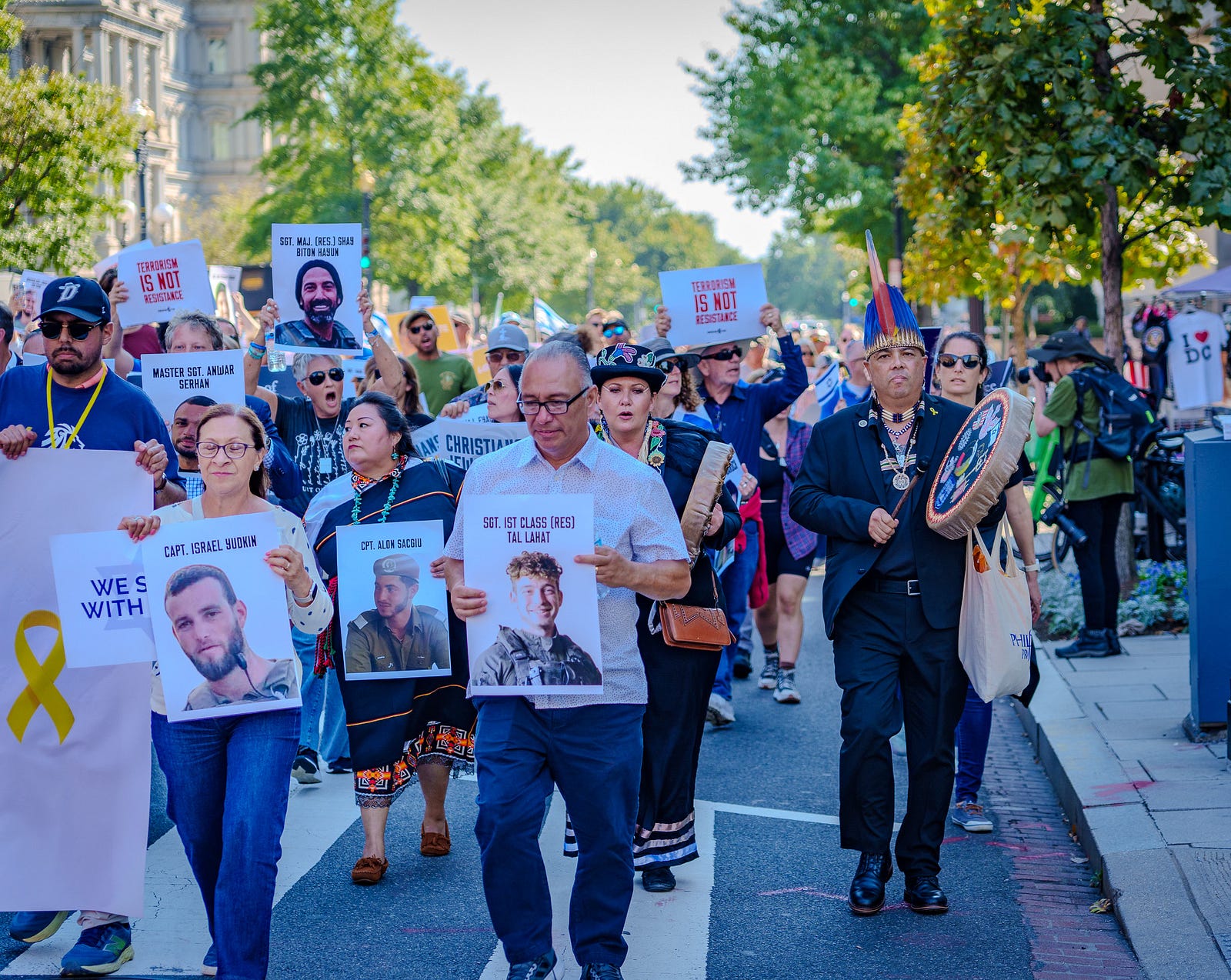
After the October 7 terrorist attack against Israel, Israel’s leaders made a promise to the Israeli people: Those responsible would pay.
The terrorists who carried it out would pay. The terrorist masterminds who commanded it, financed it, sheltered it, praised it, and treated Jewish civilian life as something to be butchered for strategic effect would not simply be allowed to wait out the news cycle.
Israel said the men responsible for October 7 were dead men walking.
This week, Israel caught up with another one.
Izz al-Din al-Haddad, the head of Hamas’s military wing, was killed in an Israeli strike in Gaza City. Israel described him as one of the senior Hamas commanders who directed the planning and execution of October 7. Hamas confirmed his death, as did his family.
Izz al-Din al-Haddad was not some minor figure buried deep in the organization, either. He was one of the last visible Hamas commanders tied to the massacre still standing.
And his death came in the same week that a new report on Hamas’s sexual violence on October 7 forced the world, again, to look at what happened that day. The 280-page report by the Civil Commission on October 7 Crimes by Hamas Against Women and Children says it drew on more than 400 accounts and more than 10,000 photos and videos. It describes sexual and gender-based violence not as incidental battlefield cruelty, but as part of the method of the attack and its aftermath.
That timing is impossible to miss.
While the world is being asked to confront, in more detail, the depravity of October 7, Israel is still doing the work it promised its own citizens it would do. It is hunting the command circle.
By a narrow count, Israel has now eliminated seven senior Hamas figures tied to the October 7 structure: Yahya Sinwar, Mohammed Deif, Marwan Issa, Saleh al-Arouri, Ismail Haniyeh, Mohammad Sinwar, and now Izz al-Din al-Haddad.
Some were military planners. Some were political leaders. Some were the men who moved between money, command, ideology, and terror. But together they formed the visible Hamas world that made October 7 possible.
The broader count is even more significant.
If we include Iran’s ruling and security echelon — the regime many analysts view as the ultimate sponsor and strategic author of the attack — the number rises to at least eighteen named senior figures.
After all, Iran did not have to sign the final tactical order to sanction October 7. When a regime funds Hamas, arms Hamas, trains Hamas, shelters Hamas, and politically protects Hamas for years, it has sanctioned what Hamas does. The U.S. Treasury has described Iran’s mechanisms of support for Hamas and Palestinian Islamic Jihad, including the role of the IRGC. The Justice Department has also charged senior Hamas leaders over October 7 and described the attack as carried out with support from Iran and Hezbollah.
Hamas did not become a terror army by accident. It did not build tunnels, stockpile rockets, train fighters, move money, coordinate propaganda, and survive as a ruling militant organization on slogans alone. It was part of a regional terror system. Iran built much of that system.
So when Israel says it is dismantling the people responsible for October 7, it is not only talking about the men who crossed the border that morning. It is talking about the machinery behind them.
This is what accountability looks like in a world where terrorist leaders do not voluntarily stand trial. It is not neat. It is not bloodless. It does not fit comfortably inside the Western fantasy that enough statements, sanctions, and conferences can stop men who filmed themselves murdering civilians.
Israel learned the opposite lesson on October 7.
The men who did this understood force. So Israel has answered with force.
The visible Hamas command circle is now almost gone. The Iranian sponsor network has taken severe losses. The message is plain: October 7 was not a passing atrocity. It was a declaration of war against the Jewish state and the Jewish people.
Israel believed them.
And Israel is keeping its promise.
(Contributing writer, Brooke Bell)